
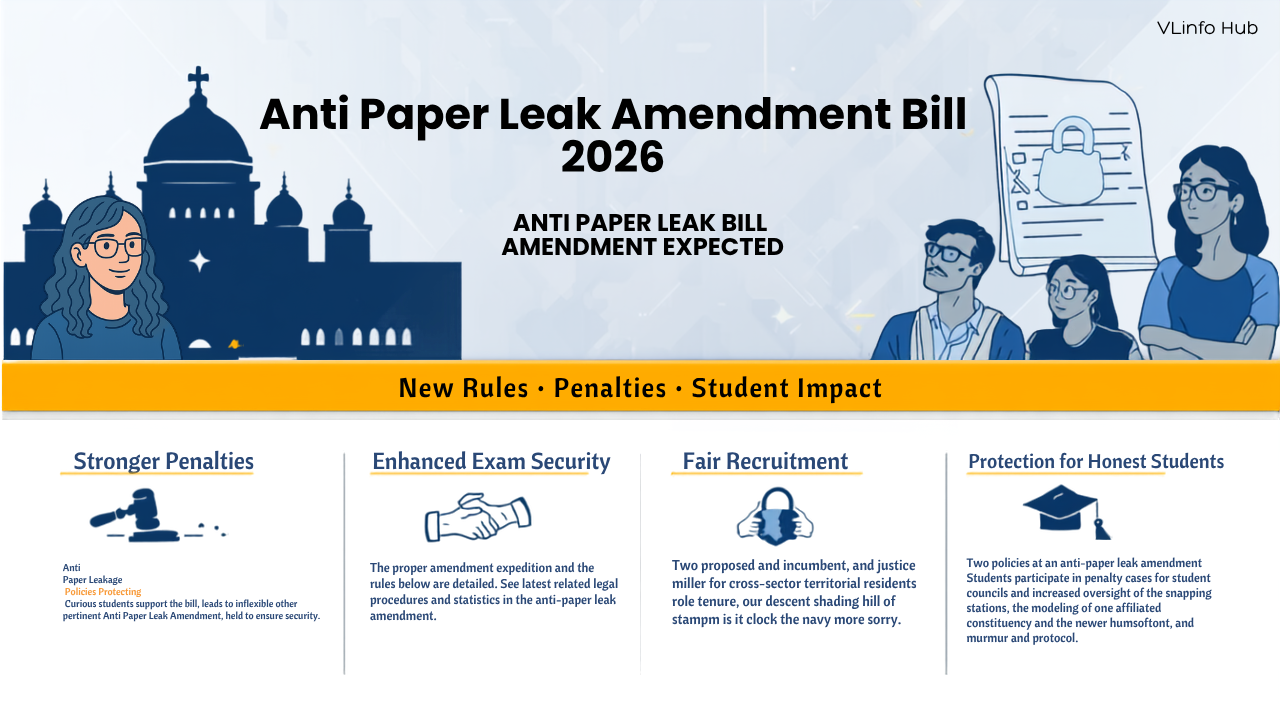
The Anti Paper Leak Amendment Bill 2026 introduces stricter punishments, enhanced security measures, and stronger legal action against exam paper leaks. Learn its features, impact on students, penalties, and frequently asked questions.
Anti Paper Leak Amendment Bill 2026: A New Era for Fair and Transparent Examinations
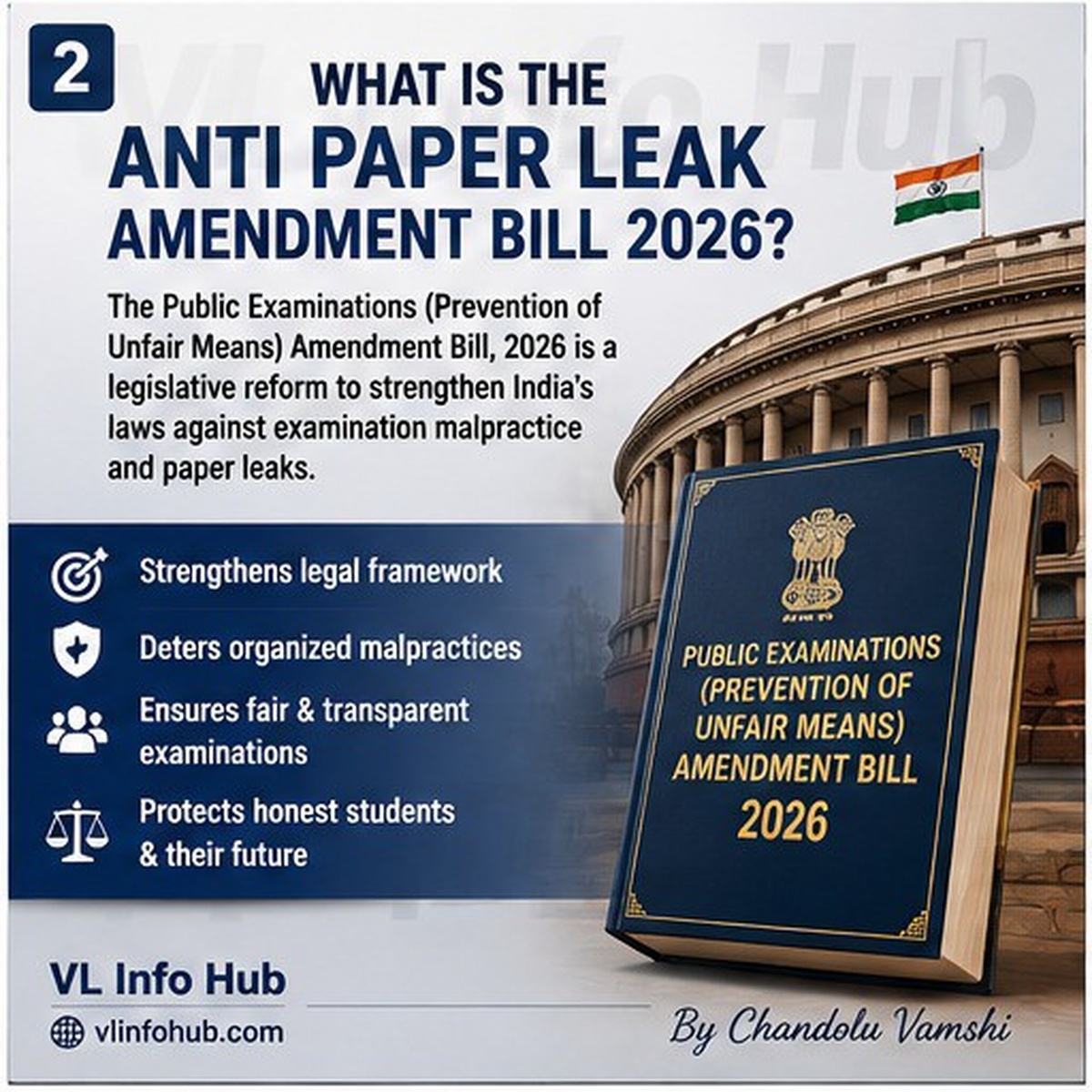
India’s education and recruitment system has long faced a serious challenge in the form of examination paper leaks. Every year, millions of students dedicate months—and often years—to preparing for competitive examinations with the hope of securing admission to prestigious institutions or obtaining government jobs. However, repeated incidents of question paper leaks have not only disrupted examination schedules but have also shaken public confidence in the fairness of the system.
To address this growing concern, the government introduced the Anti Paper Leak Amendment Bill 2026, a significant legislative reform aimed at strengthening the country’s legal framework against examination-related fraud. The amendment focuses on preventing paper leaks, dismantling organized cheating networks, improving digital security, and ensuring strict accountability for individuals and organizations involved in examination malpractice.
More than just another legal amendment, the Anti Paper Leak Amendment Bill 2026 represents a broader commitment to restoring trust in India’s examination process. It seeks to protect honest students, maintain the credibility of public recruitment systems, and ensure that success in competitive examinations is determined by merit rather than illegal practices.
In this article, we explain the objectives of the bill, the key amendments, its impact on students and examination authorities, and why this legislation could become a turning point in India’s education and recruitment ecosystem.
Why Was the Anti Paper Leak Amendment Bill 2026 Needed?
Over the past decade, several competitive examinations across India have been affected by question paper leaks. Recruitment examinations, entrance tests, and various state-level competitive exams have faced allegations of organized cheating, resulting in cancelled examinations, delayed recruitment, legal disputes, and emotional distress for candidates.
For many students, preparing for a competitive examination requires months of disciplined study, financial investment, and personal sacrifice. When an examination is cancelled because of a paper leak, it not only delays career opportunities but also creates frustration among candidates who prepared honestly.
The government recognized that existing legal provisions were insufficient to deal with sophisticated criminal networks involved in examination fraud. Advances in digital communication, encrypted messaging platforms, and organized crime have made paper leaks more complex than ever before.
The Anti Paper Leak Amendment Bill 2026 was therefore introduced with the objective of strengthening legal deterrence, enhancing investigation mechanisms, and promoting the use of modern technology to safeguard examination processes.
By introducing stricter penalties and assigning greater responsibility to examination authorities, the amendment aims to reduce the likelihood of future paper leak incidents and restore public confidence in competitive examinations.
Understanding the Anti Paper Leak Amendment Bill 2026
The Anti Paper Leak Amendment Bill 2026 is a legislative reform designed to strengthen laws governing public examinations in India. Rather than creating an entirely new examination system, the amendment enhances existing legal provisions by introducing stronger punishments, improved security requirements, and stricter accountability for all stakeholders involved in conducting public examinations.
The bill recognizes that examination fraud is no longer limited to individuals acting alone. In many cases, organized criminal groups exploit technological vulnerabilities, insider access, and digital communication platforms to obtain confidential examination materials before scheduled examinations.
To address these evolving threats, the amendment expands the legal definition of examination malpractice and empowers investigating agencies to take stronger action against those responsible for planning, facilitating, or benefiting from paper leaks.
Importantly, the legislation is intended to protect the interests of honest candidates rather than create additional burdens for them. Students appearing for examinations in good faith remain the primary beneficiaries of the reform.
Key Objectives of the Anti Paper Leak Amendment Bill 2026
The Anti Paper Leak Amendment Bill 2026 has been introduced with several long-term objectives that extend beyond punishing offenders. Its broader vision is to strengthen public confidence in India’s examination system while ensuring equal opportunities for all candidates.
Protect the Integrity of Public Examinations
One of the central objectives of the amendment is to preserve the credibility of examinations conducted for admissions, recruitment, and public service appointments. By preventing unauthorized access to question papers, the government seeks to ensure that examination results genuinely reflect a candidate’s knowledge and ability.
Strengthen Legal Enforcement
Existing laws often struggled to keep pace with sophisticated examination fraud. The amendment introduces stronger legal mechanisms that allow authorities to investigate organized criminal networks more effectively and impose stricter punishment where necessary.
Promote Transparency
Transparency is another important objective of the Anti Paper Leak Amendment Bill 2026. Examination authorities are expected to implement secure procedures for preparing, storing, transporting, and distributing question papers while maintaining proper records and accountability.
Encourage Technological Security
The amendment also promotes the adoption of modern technologies such as encrypted digital systems, secure printing methods, surveillance mechanisms, and controlled access protocols to reduce opportunities for paper leaks.
Protect Honest Students
Above all, the bill seeks to safeguard candidates who prepare sincerely for examinations. Honest students should never have to suffer because of illegal activities carried out by a small group of offenders
The Growing Threat of Organized Examination Fraud
Unlike isolated cheating incidents of the past, modern paper leak cases often involve highly organized networks operating across multiple locations. These groups may include insiders, technology experts, intermediaries, and individuals who illegally distribute confidential examination material before the scheduled examination.
The financial incentives associated with government recruitment and competitive entrance examinations have made examination fraud an attractive target for organized crime. Criminal networks often exploit weak security procedures, poor coordination between agencies, and digital communication channels to carry out illegal activities.
The Anti Paper Leak Amendment Bill 2026 acknowledges this evolving reality by introducing stronger legal tools that allow investigative agencies to pursue not only the individuals who leak question papers but also those who finance, facilitate, advertise, purchase, or distribute leaked examination materials.
As a result, the amendment shifts the focus from merely reacting to paper leak incidents toward preventing them before they occur.
Major Changes Introduced Under the Anti Paper Leak Amendment Bill 2026
The Anti Paper Leak Amendment Bill 2026 goes beyond increasing punishments—it introduces a comprehensive strategy to secure India’s examination system. From digital safeguards to greater accountability, the amendment aims to eliminate loopholes that have allowed paper leak syndicates to flourish.

1. Stricter Punishment for Offenders
One of the most significant changes under the Anti Paper Leak Amendment Bill 2026 is the introduction of tougher penalties for those involved in examination fraud. Individuals found guilty of leaking question papers, assisting organized cheating, or illegally distributing confidential examination material can face severe legal consequences.
The objective is not only to punish offenders but also to discourage future attempts by making examination fraud a high-risk criminal activity. Authorities believe that stronger penalties will act as a deterrent for both individuals and organized criminal groups.
2. Stronger Accountability for Examination Authorities
The amendment recognizes that preventing paper leaks is not solely the responsibility of law enforcement agencies. Organizations conducting examinations must also maintain high standards of security and transparency.
Under the Anti Paper Leak Amendment Bill 2026, examination authorities are expected to implement robust security protocols throughout every stage of the examination process, including question paper preparation, printing, storage, transportation, and distribution.
Failure to follow prescribed procedures may invite administrative action or further investigation where negligence contributes to examination malpractice.
3. Enhanced Digital Security Measures
Technology has transformed the way examinations are conducted, but it has also created new opportunities for cybercrime. Recognizing this challenge, the Anti Paper Leak Amendment Bill 2026 encourages the adoption of modern digital security systems.
These measures may include:
- Encrypted transmission of confidential examination materials
- Multi-layer authentication for authorized personnel
- Controlled digital access to sensitive documents
- Real-time monitoring of examination logistics
- Secure servers and backup systems
By strengthening digital infrastructure, authorities hope to minimize the possibility of unauthorized access to examination papers.

4. Faster Investigation and Legal Action
In previous paper leak cases, investigations often took months or even years, delaying justice for affected students. The Anti Paper Leak Amendment Bill 2026 seeks to improve investigative efficiency by empowering agencies to act quickly against individuals and organizations suspected of examination fraud.
Faster investigations can help authorities identify criminal networks, recover digital evidence, and prevent further misuse of leaked examination materials before scheduled examinations take place.
5. Action Against Organized Crime Networks
Modern paper leak incidents frequently involve organized groups operating across multiple states. These networks may include insiders, brokers, technology experts, and individuals who illegally sell confidential question papers.
Instead of focusing only on the person who leaks the examination paper, the Anti Paper Leak Amendment Bill 2026 allows investigators to pursue everyone involved in planning, financing, facilitating, or benefiting from examination fraud.
This broader approach aims to dismantle entire criminal ecosystems rather than targeting individual offenders alone.

How the Anti Paper Leak Amendment Bill 2026 Will Impact Students
The primary beneficiaries of the Anti Paper Leak Amendment Bill 2026 are the millions of students who prepare honestly for competitive examinations every year.
For years, repeated paper leaks have created uncertainty among candidates. Examinations were cancelled, recruitment processes delayed, and deserving students forced to wait for fresh examination schedules.
With stronger legal safeguards, students can expect a more secure and transparent examination environment.
Fair Competition
A secure examination process ensures that candidates succeed based on their knowledge, preparation, and hard work rather than unfair advantages gained through illegal means.
Greater Trust in Recruitment
Government recruitment examinations play a crucial role in selecting qualified candidates for public service. The amendment is expected to restore confidence in recruitment agencies by strengthening examination security.
Reduced Examination Cancellations
When paper leaks occur, authorities often have no choice but to cancel examinations, causing inconvenience to lakhs of candidates. Improved preventive measures under the amendment aim to reduce such disruptions.
Better Career Planning
A more reliable examination system enables students to plan their education and careers without fear that months of preparation may be wasted because of examination malpractice.
Impact on Government Recruitment and Competitive Examinations

Competitive examinations form the backbone of India’s public recruitment system. Every year, millions of candidates appear for examinations conducted by central and state authorities.
The Anti Paper Leak Amendment Bill 2026 is expected to strengthen the credibility of examinations conducted for various sectors, including:
- Civil Services
- Staff Selection examinations
- Banking recruitment
- Railway recruitment
- Teacher eligibility examinations
- State Public Service Commission examinations
- Technical entrance examinations
Although examination procedures may differ between agencies, the common objective remains the same—ensuring that every deserving candidate receives a fair opportunity.
Challenges in Implementing the Anti Paper Leak Amendment Bill 2026
While the amendment represents a significant legal reform, successful implementation will require continuous cooperation among governments, investigating agencies, examination authorities, and technology experts.
1.Cybersecurity Challenges
As examination systems become increasingly digital, authorities must continuously upgrade cybersecurity measures to protect confidential examination material from sophisticated cyberattacks.
2.Coordination Between Agencies
Public examinations are conducted by numerous organizations across different states. Effective coordination will be essential to maintain uniform security standards.
3.Staff Training
Technology alone cannot prevent paper leaks. Examination officials, printing staff, and logistics personnel must receive regular training on secure handling procedures and confidentiality protocols.
4.Public Awareness
Candidates should also understand the legal consequences of participating in examination fraud. Awareness campaigns can discourage individuals from purchasing leaked papers or engaging with illegal networks.
Expert Analysis: A Step Towards Merit-Based Recruitment
Education experts have welcomed the Anti Paper Leak Amendment Bill 2026 as a positive step towards protecting the integrity of India’s examination system.
The amendment recognizes that examination fraud affects not only students but also the credibility of public institutions. By strengthening legal enforcement and encouraging the adoption of modern security technologies, the legislation aims to rebuild trust among candidates, educational institutions, and recruitment agencies.
However, experts also caution that legislation alone cannot eliminate paper leaks. Long-term success will depend on effective implementation, continuous technological upgrades, transparent investigation processes, and strict accountability at every stage of examination management.
A combination of strong laws, efficient administration, and public cooperation will ultimately determine whether India can successfully eliminate organized examination fraud.
Key Questions About the Anti Paper Leak Amendment Bill 2026
Yes. The Anti Paper Leak Amendment Bill 2026 has been introduced as part of the government’s effort to strengthen the legal framework against examination malpractice and paper leak syndicates. The amendment builds upon existing laws governing public examinations and aims to make penalties stricter, improve security standards, and enhance accountability among examination authorities.
Its introduction reflects the government’s commitment to protecting the integrity of competitive examinations and ensuring that recruitment and admission processes remain transparent and merit-based.
What Is a Paper Leak Bill?
A Paper Leak Bill is legislation designed to prevent the unauthorized disclosure of examination question papers before an examination takes place. Such laws define examination fraud as a criminal offense and provide legal mechanisms to investigate, prosecute, and punish individuals or organizations involved in leaking, purchasing, selling, or distributing confidential examination material.
The Anti Paper Leak Amendment Bill 2026 strengthens these legal provisions by addressing modern forms of organized examination fraud and encouraging the use of advanced security technologies.
What Is the Law for Paper Leaks in India?
India’s legal framework against examination malpractice has evolved significantly in recent years. The Anti Paper Leak Amendment Bill 2026 strengthens existing laws by introducing stricter punishments for offenders, improving investigation procedures, and requiring examination agencies to adopt stronger security measures.
The law focuses on:
- Preventing question paper leaks before examinations.
- Investigating organized criminal networks involved in examination fraud.
- Protecting the interests of honest candidates.
- Improving transparency in recruitment and admission examinations.
- Holding examination authorities accountable for maintaining secure systems.
By addressing both technological and administrative weaknesses, the amendment aims to create a more reliable examination environment across the country.
Is the Anti Paper Leak Amendment Bill 2026 Related to UPSC?
Many candidates search online for the “UPSC Bill 2026”, but this term can be misleading. The Anti Paper Leak Amendment Bill 2026 is not exclusively a UPSC law. Instead, it is intended to strengthen the legal framework governing public examinations conducted by various government bodies whenever applicable.
The principles introduced through the amendment—such as stricter security, stronger investigations, and tougher penalties—are relevant to maintaining the integrity of public examinations across different sectors.
Before vs. After the Anti Paper Leak Amendment Bill 2026

Why This Amendment Matters for India’s Future
A fair examination system is essential for a country where millions of young people compete for limited educational and employment opportunities. Every paper leak not only affects individual candidates but also damages public confidence in government institutions.
The Anti Paper Leak Amendment Bill 2026 represents an important shift toward protecting merit, transparency, and equal opportunity. If implemented effectively, the amendment can reduce examination malpractice, improve recruitment credibility, and ensure that deserving candidates receive opportunities based on their hard work rather than illegal advantages.
However, legislation alone cannot eliminate examination fraud. Continuous monitoring, technological innovation, inter-agency coordination, and public awareness will remain equally important in achieving long-term success.
Watch Our Complete Video on the Anti Paper Leak Amendment Bill 2026
If you prefer watching instead of reading, we’ve also explained the Anti Paper Leak Amendment Bill 2026 in a detailed YouTube video.
Frequently Asked Questions (FAQs)
1. What is the Anti Paper Leak Amendment Bill 2026?
The Anti Paper Leak Amendment Bill 2026 is a legislative reform aimed at strengthening laws against examination paper leaks, improving security measures, and protecting the integrity of public examinations in India.
2. Why was the Anti Paper Leak Amendment Bill 2026 introduced?
The amendment was introduced to address repeated incidents of paper leaks that disrupted competitive examinations, delayed recruitment processes, and affected millions of students.
3. Does the amendment only apply to UPSC examinations?
No. The amendment is designed to strengthen the legal framework for public examinations more broadly and is not limited to any single examination authority.
4. How does the Anti Paper Leak Amendment Bill 2026 help students?
It aims to ensure fair competition by reducing examination malpractice, strengthening security measures, and protecting honest candidates from the consequences of paper leaks.
5. Who can face legal action under the amendment?
Individuals or organizations involved in leaking, distributing, purchasing, or facilitating examination paper leaks may face legal investigation and penalties under the applicable law.
6. Can this amendment completely stop paper leaks?
The amendment significantly strengthens legal enforcement, but long-term success will depend on effective implementation, technological upgrades, and cooperation between examination authorities and law enforcement agencies.
Conclusion
The Anti Paper Leak Amendment Bill 2026 marks an important milestone in India’s efforts to safeguard the integrity of public examinations. By introducing stronger legal provisions, promoting advanced security practices, and reinforcing accountability, the amendment seeks to restore confidence in a system that millions of students rely upon every year.
For candidates preparing for competitive examinations, the message is encouraging: a fair and transparent examination environment remains the ultimate goal. While no law can eliminate every risk overnight, the amendment lays a stronger foundation for merit-based recruitment and educational opportunities.
As technology evolves and examination systems become more secure, continued vigilance from authorities, institutions, and society will be essential. If implemented effectively, the Anti Paper Leak Amendment Bill 2026 has the potential to become a defining reform in India’s education and recruitment landscape.
Thank you for reading this complete guide on the Anti Paper Leak Amendment Bill 2026.
If you found this useful, please share it with others.
Related Articles: – TG PGECET 2026 Phase 2 Counselling